


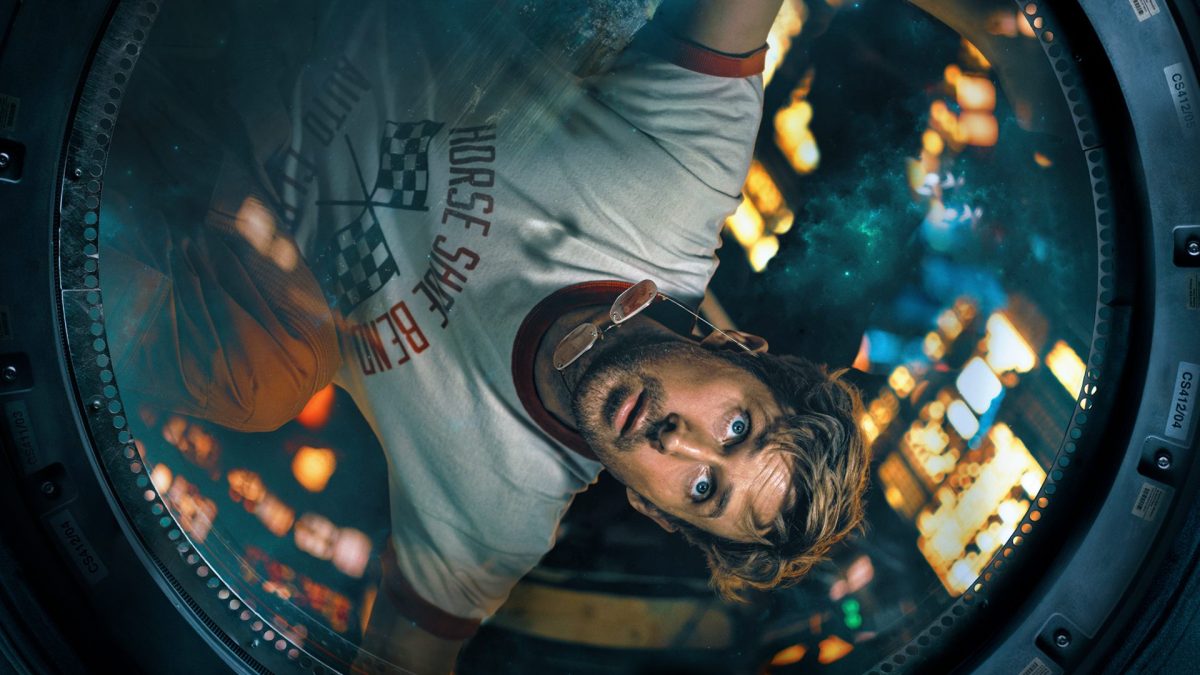
If there’s one thing 2026 has made clear, it’s that space is back. With Artemis II launching humanity toward the Moon again, “Project Hail Mary” arrives not just as entertainment, but as cultural timing at its finest. Released on March 20, the film is an adaptation of the novel of the same name, authored by Andy Weir. Directed by Phil Lord and Christopher Miller, and led by a grounded performance from Ryan Gosling, the movie follows a lone astronaut tasked with solving a crisis that threatens life on Earth. While the premise might sound familiar, the execution of the film truly sets it apart from movies with a similar plotline.
The film’s commitment to problem-solving was an element that stood out to me. Instead of relying purely on action or spectacle, “Project Hail Mary” builds tension through the depiction of science. Scenes often revolve around figuring things out, testing ideas, making mistakes and trying again. It turns the scientific process into something cinematic, which isn’t easy to pull off. The result is a movie that feels intelligent without being inaccessible.
At the center of it all is Gosling’s performance, which keeps the story grounded even as the stakes become enormous. He plays the character with a mix of uncertainty, humor and determination that makes him feel relatable. Rather than a typical “hero,” he comes across as an average person improvising under pressure, which makes his successes more satisfying and his failures more impactful.
Another strength of the film is its tone. Modern sci-fi often leans toward darker, more pessimistic views of the future, but “Project Hail Mary” takes a different approach. There’s a sense of optimism running through it, not in a naive way, but in a way that emphasizes curiosity and cooperation. It suggests that science isn’t just a tool for survival, but something that connects us and pushes us forward.
The film’s pacing proved to be integral to its success. Despite its reliance on scientific exposition, I enjoyed how the narrative was able to balance explanation with forward momentum. Scenes are given enough space to develop ideas without stalling the story, resulting in a structure that feels deliberate rather than slow or boring.
Visually, I thought that “Project Hail Mary” was decisive, as it avoided unnecessary spectacle and kept its focus on what matters. Rather than leaning on spectacle, the filmmakers emphasize contrast between the vastness of space and the confinement of the protagonist’s environment. The cinematography underscores the film’s emotional isolation, while a subtle, unobtrusive score reinforces tension.
That’s not to say the movie is flawless. At times, it follows familiar storytelling beats, and some moments feel predictable if you’ve seen a lot of sci-fi. It doesn’t completely reinvent the genre or take major narrative risks. But what it does offer is a version of sci-fi that is truly engaging, and emotionally sincere.
Overall, “Project Hail Mary” succeeds because it understands what makes the genre compelling in the first place: big ideas, human stakes, and a sense of wonder. It may not be revolutionary, but it’s a reminder of why space stories continue to resonate, especially now.